Charlton Heston

Charlton Heston enlisted in 1941 around the time the U.S. entered World War II. He was stationed in Alaska as a radio operator and aerial gunner on the B-25 Mitchell bomber, but he never saw combat. Later, after he became a Hollywood star, the military asked Heston to lend his distinctive voice to the narration of Department of Energy films about nuclear weapons. Because these films were classified, for this work Heston needed to hold the highest security clearance level in the U.S. at that time.
James Stewart
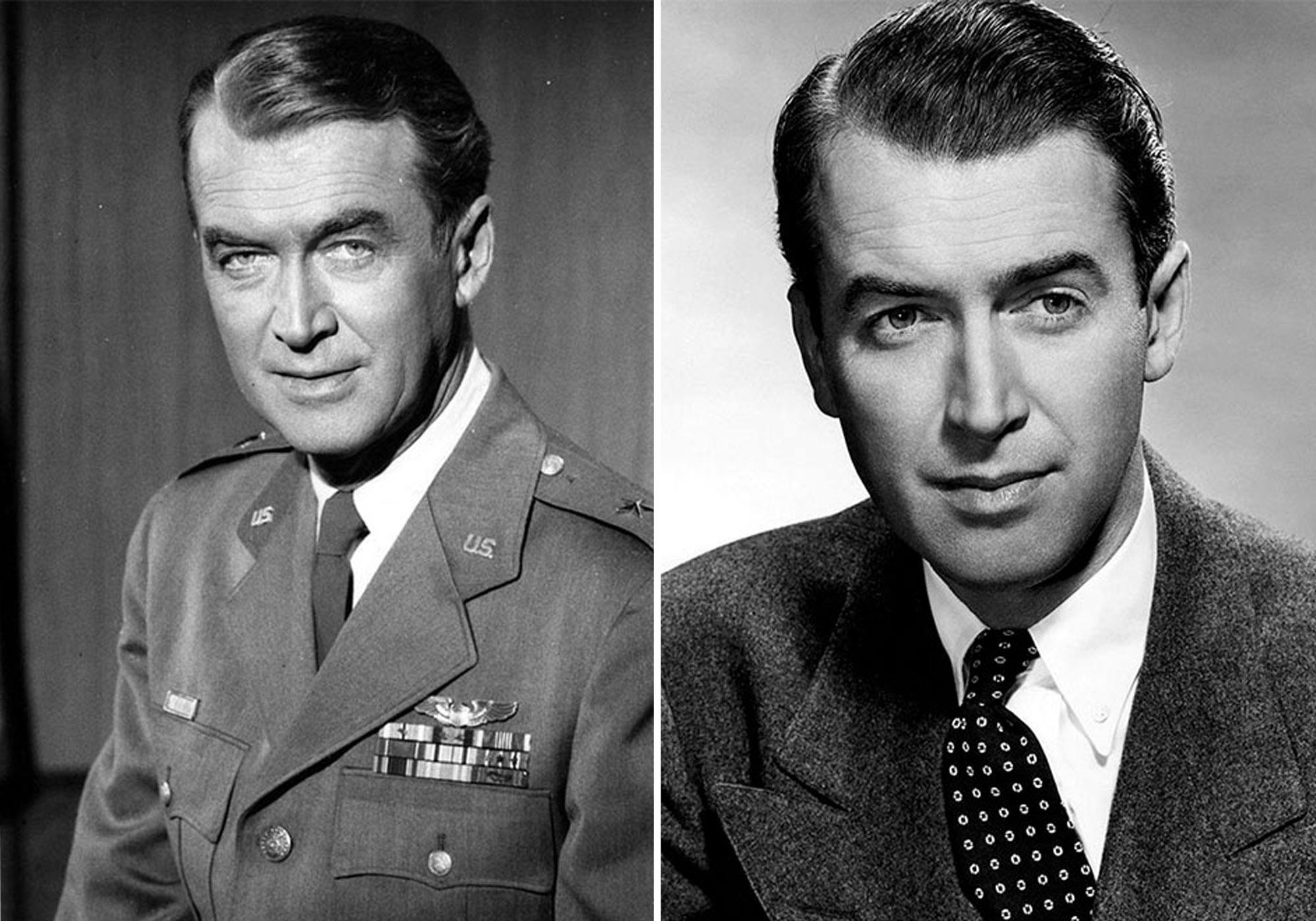
James Stewart initially enlisted in the U.S. Army Air Corps before the United States entered World War II. While in training, he took college courses with the goal of obtaining a commission, which he received after the attack on Pearl Harbor. He went through basic flight training and was trained in several different types of aircraft before being transferred to England as the commander of a B-24 bomber squadron. Stewart had flown 20 combat missions by the end of war, and after his active service was complete, he stayed in the U.S. Air Force Reserve. In July 1959, he was promoted to brigadier general.
Steve McQueen
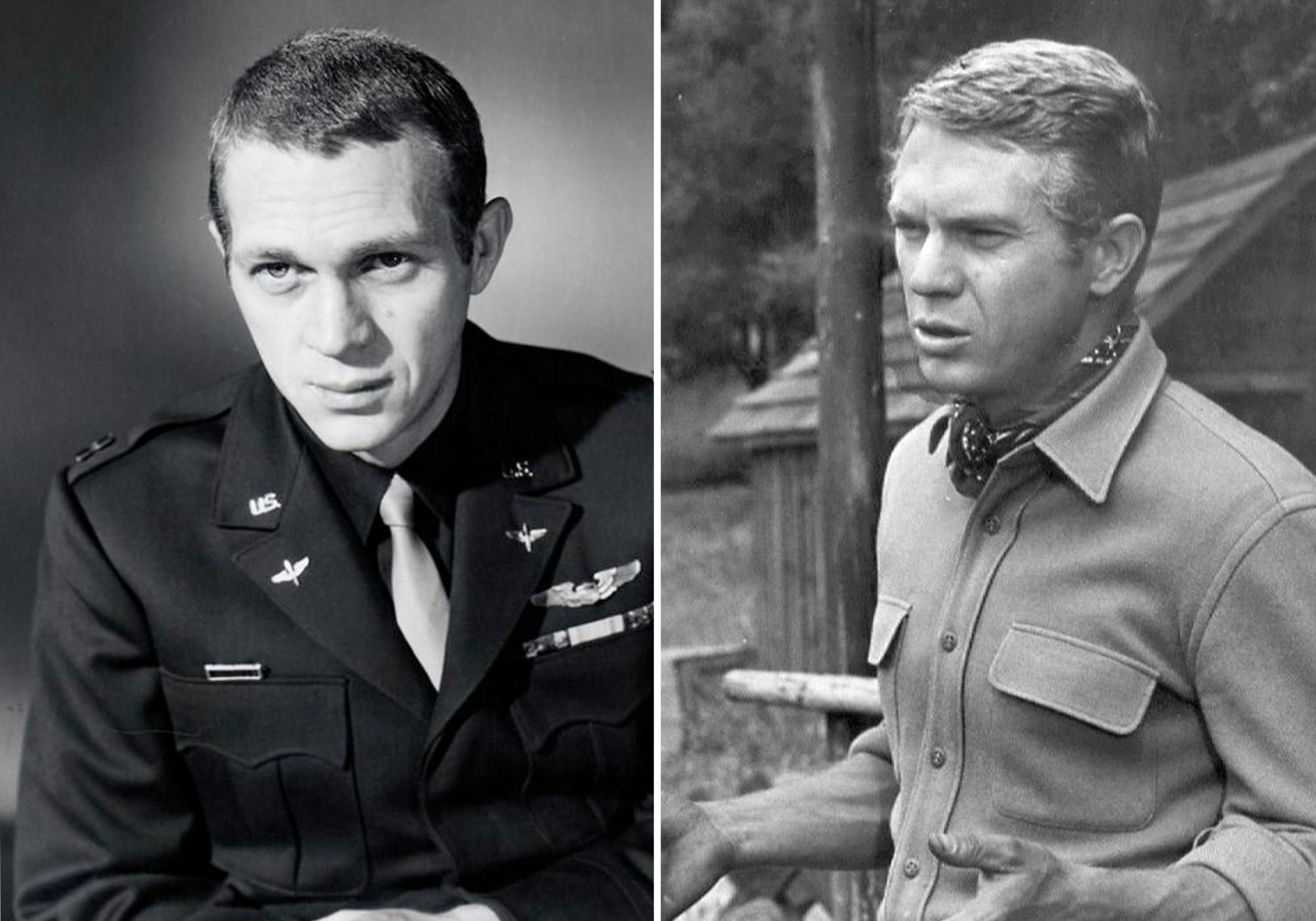
“All in all, despite my problems, I liked my time in the Marines,” Steve McQueen once said. After a rough early life, he enlisted in the U.S. Marine Corps in 1947. But McQueen was inclined toward disobedience, to put it mildly, and he was demoted seven times. After a weekend pass turned into a two-week “vacation” of his own making, he was arrested, which earned him some time in the brig. During that period, he decided to reform himself. Later, McQueen was training in the Arctic when the ship he was on hit a sandbank. Several tanks and their crews were thrown into the water and many drowned, but McQueen was able to rescue five men.